
Adhesive Selection Matrix: 12 Substrates Against 5 Adhesive Systems, With the Numbers
When a label fails in the field, it is almost never the facestock and almost never the print quality. It is an adhesive that was selected for the wrong surface. This is the matrix our technical service team works through before we quote a new construction, and it is the fastest way for a converter to stop guessing.
The whole thing rests on one physical fact. A pressure-sensitive adhesive is not a glue that cures — it is an extremely viscous liquid that has to flow out across the surface and into its micro-roughness. The industry calls this wetting out. A liquid spreads on a surface when the surface's surface energy is higher than the liquid's own. So the question is never "is this glue strong?" It is "does this adhesive wet out on this material at this temperature?"
The threshold that decides everything
Most pressure-sensitive label adhesives sit at roughly 36–39 dyn/cm of their own surface tension. That is the number to hold in your head, because it defines a line:
- Above roughly 38 dyn/cm — the surface is easy. A standard permanent acrylic wets out and bonds predictably.
- Roughly 34–38 dyn/cm — borderline. Test a standard and a low-surface-energy (LSE) adhesive side by side on real parts.
- Below roughly 36 dyn/cm — low surface energy. A standard acrylic beads up microscopically instead of spreading, and the label holds on application and lifts a few days later.
Two caveats that matter more than the table itself. First, these are typical values for clean, untreated material — the grade, the fillers, the mould release agents and the plasticisers in your actual part can move the real number substantially. Second, a single plastic family varies enormously: ABS, rigid PVC and powder coatings are all described as "one material" and all behave as a range.
The only authoritative measurement is one taken on your part, with dyne test inks or a contact-angle reading. Treat any published table — including the one below — as a hypothesis to be tested, not a specification. The dyn/cm values here are drawn from published 3M bonding documentation and the critical surface tension tables converters use for adhesive selection.
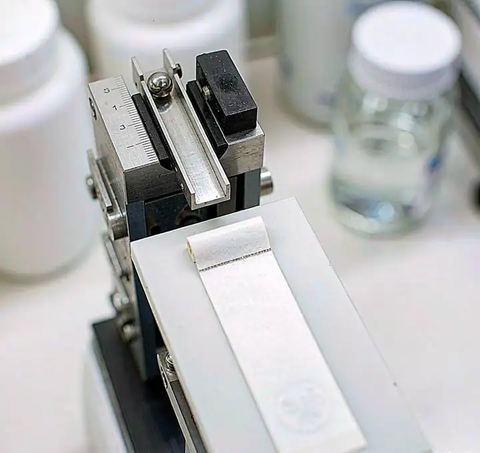
Surface energy of the twelve substrates we get asked about most
| Substrate | Typical surface energy (dyn/cm) | Class | Practical consequence |
|---|---|---|---|
| PTFE (Teflon) | ≈ 18 | Very low | Not bondable without surface treatment or a silicone adhesive |
| Silicone rubber | ≈ 20–24 | Very low | Not bondable; also contaminates adjacent surfaces |
| Polypropylene (PP) | ≈ 29–30 | Low (LSE) | The single most common cause of peel-off on plastic parts |
| Polyethylene (PE, HDPE, LDPE) | ≈ 31 | Low (LSE) | Corona or flame treatment recommended |
| EVA | ≈ 33 | Low (LSE) | Dedicated LSE adhesive needed |
| Polystyrene (PS) | ≈ 36 | Borderline | Risk zone — always test |
| Acetal (POM) | ≈ 36–37 | Borderline | Risk zone — always test |
| Rigid PVC | ≈ 38–39 | Medium | Strongly dependent on formulation and plasticiser content |
| ABS | ≈ 38–42 | Medium | Usually fine; wide formulation spread |
| Polycarbonate (PC) | ≈ 42–44 | Medium–high | Adhesion generally reliable |
| Polyester (PET) | ≈ 39–43 | Medium–high | Reliable with a standard acrylic |
| Glass | ≈ 250–500 | High | Excellent, provided it is clean and dry |
Metals sit far above everything in this list — aluminium around 840 dyn/cm, copper around 1,103 — which is why a metal container can be labelled with almost anything and almost never fails for adhesion reasons. The failures on metal are about temperature, chemicals and surface contamination, not surface energy.
The five adhesive systems, and what each one is actually for
| System | Surface tension / behaviour | Strengths | Limits | Choose it when |
|---|---|---|---|---|
| Standard permanent acrylic (water-based) | ≈ 36–39 dyn/cm — needs a receptive surface | Best ageing, UV resistance, chemical resistance, does not yellow, wide service temperature | Slower initial tack; needs dwell time; fails on untreated polyolefins | Default for glass, metal, PET, PC, ABS, coated paperboard and long-life labels |
| LSE-modified acrylic | Formulated to wet out below ≈ 36 dyn/cm | Handles PP, PE and many powder coats with acrylic-class ageing | Costs more than standard acrylic; still not a cure for PTFE or silicone | Untreated or lightly treated polyolefin containers, powder-coated surfaces |
| Hot-melt rubber | Very fast wetting; high initial tack | Grips immediately, cheap, excellent on rough and imperfect surfaces | Poor UV resistance, poor high-temperature performance, can ooze, may leave residue | Short-life labels — cartons, shipping, logistics, corrugated, cost-sensitive work |
| Solvent acrylic | Similar surface-energy profile to standard acrylic, applied from solvent | Very high cohesive strength, outstanding on difficult surfaces and in cold application, strong chemical resistance | Highest cost of the acrylic family; solvent handling considerations | Cold application, chemical drums, automotive, long-life outdoor and industrial labels |
| Silicone | Wets out very low-energy surfaces | Widest temperature range — from around −40 °C to well above 200 °C; bonds to silicone | Expensive; weaker on ordinary surfaces; usually requires a speciality construction | High-temperature processes, silicone substrates, and the small set of cases where nothing else will wet out |
The matrix: substrate against recommended system
This is the synthesis. Read down the "First choice" column and treat the "If that fails" column as the escalation path — not as an alternative you pick because it is cheaper.
| Substrate | First choice | If that fails | Note |
|---|---|---|---|
| Glass (bottles, jars, vials) | Standard permanent acrylic | Solvent acrylic | Failure is nearly always contamination or a wet surface, not the adhesive |
| Aluminium / steel cans | Standard permanent acrylic | Solvent acrylic | Oxidation, oils and condensation matter more than the substrate itself |
| PET containers | Standard permanent acrylic | Solvent acrylic | Reliable. Watch curved surfaces and squeeze behaviour |
| Rigid PVC | Standard permanent acrylic | LSE-modified acrylic | Plasticiser migration can soften the adhesive over time |
| ABS / PC housings | Standard permanent acrylic | LSE-modified acrylic | Usually straightforward; test textured or release-agent-heavy mouldings |
| Coated paperboard / cartons | Standard permanent acrylic | Hot-melt rubber | Hot-melt if the carton surface is rough or uncoated and the label is short-life |
| Corrugated board | Hot-melt rubber | LSE-modified acrylic | Texture reduces contact area — a thicker, softer, high-tack adhesive fills it better |
| Untreated PP | LSE-modified acrylic | Hot-melt rubber, or treat the surface | The classic peel-off case. Corona/flame treatment is the other fix |
| Untreated PE | LSE-modified acrylic | Hot-melt rubber, or treat the surface | As above. Flexible PE also needs an adhesive that can flex with it |
| Powder-coated metal | Test first — treat as unknown | LSE-modified acrylic | The label bonds to the coating, not the metal. Some coatings behave like LSE plastics |
| Silicone / PTFE | Silicone adhesive | Chemically etched facestock | The only genuinely difficult case in this table |
| Cold or frozen surfaces | Solvent acrylic (cold-application grade) | Freezer-grade hot-melt | Application temperature, not service temperature, is the constraint |
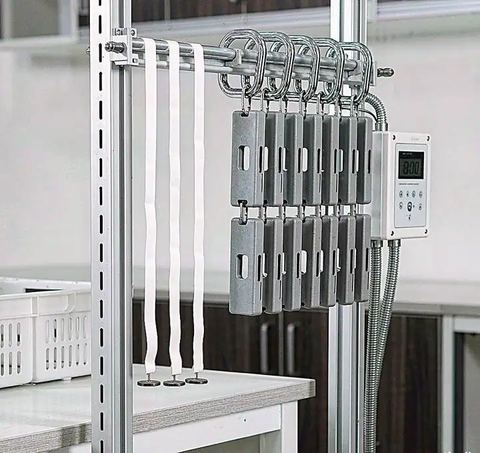
Two temperatures, and why conflating them causes failures
Every adhesive datasheet gives two numbers. Buyers routinely quote one and specify the other.
- Minimum application temperature. The coldest surface the label can be applied to and still wet out and bond. Below this, the adhesive is too stiff to flow, and no amount of dwell time fixes it.
- Service temperature range. What the already-bonded label survives afterwards — heat in a warehouse, cold in a freezer, a hot-fill cycle.
A construction rated for −20 °C to +80 °C service can fail completely on a cold-fill line at +2 °C. The label went on, looked fine, and lifted two days later, because it never bonded in the first place. If the failure is "it lifted after a day or two," the first question is always what was the surface temperature at application, not what adhesive did you ship me.
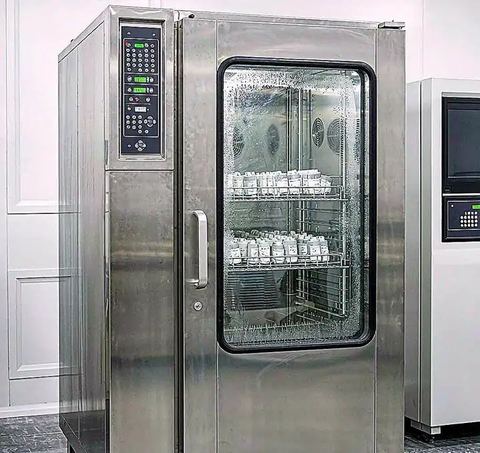
The diagnostic that saves the most time
Three symptoms cover most real-world complaints, and each points at a different fix.
| What you see | What it means | What to change |
|---|---|---|
| Label holds on application, lifts within 1–3 days | The adhesive never wet out. Surface energy is below the adhesive's threshold, or the surface was cold, wet or contaminated | The adhesive family — move to LSE or solvent acrylic — or treat the substrate. Changing supplier at the same chemistry will not help |
| Label peels cleanly and leaves no residue on the product, but glue stays on the label | Adhesive transfer. The bond to the container beat the bond to its own facestock — the primer is missing or too light | The construction, not the adhesive. Ask whether a primer is present and at what dry coat weight |
| Label oozes at the edges in a hot warehouse, or yellows outdoors | Rubber adhesive in a job that wanted acrylic | Move up to acrylic. This is a chemistry mismatch, not a coat weight problem |
Note what is absent from that table: "change supplier." Almost every adhesive failure we are asked to investigate is a selection error, and the same selection error will reproduce itself with a different supplier at the same chemistry. If your substrate is PP, PE, silicone or a powder coating, the default hypothesis is not "the glue is bad." It is "this adhesive does not wet out this surface."
How this guide was compiled
The material-selection logic and the failure-diagnosis table come from our own technical service work — the complaints converters bring us and the constructions that resolved them. The surface-energy values are not our measurements: they are the typical values published in 3M bonding documentation and in the critical surface tension tables that adhesive converters use for selection, and they are reproduced here as a starting hypothesis. A single polymer family varies with grade, fillers, mould release agents and ageing, so the authoritative number is the one you measure on your own part with dyne test inks. Where the two disagree, trust your measurement.
If you know your substrate and your application temperature and you want the short answer — which of the five systems, at what coat weight, with which liner — send us those two facts and we will quote it. If the honest answer is that your substrate needs surface treatment rather than a different adhesive, we will say so before you place an order.
FAQ
What surface energy do I need for a standard acrylic adhesive to work?
Above roughly 36–38 dyn/cm a standard permanent acrylic wets out and bonds predictably. That is the reference threshold the pressure-sensitive industry uses. Below it, the adhesive beads up microscopically instead of flowing into contact, and the label holds on application then lifts a few days later.
Which plastics cause the most label failures?
Untreated polypropylene (around 29 dyn/cm) and polyethylene (around 31 dyn/cm) — both below the threshold. They are the classic peel-off case on plastic containers. The fix is either an LSE-modified acrylic adhesive or surface treatment (corona or flame) on the container. Changing supplier at the same chemistry will not help.
What is the difference between application temperature and service temperature?
Minimum application temperature is the coldest surface the label can be applied to and still wet out and bond. Service temperature range is what the already-bonded label survives afterwards. A construction rated −20 °C to +80 °C service can fail completely on a cold-fill line at +2 °C, because the adhesive never bonded in the first place.
Can I use hot-melt rubber adhesive instead of acrylic to save money?
Only if the application can tolerate its limits. Hot-melt rubber gives fast, high initial tack at lower cost and works well on rough or imperfect surfaces, which makes it right for cartons and shipping labels. It has poor UV resistance and poor high-temperature performance, and it can ooze or leave residue. If the label oozes at the edges in a hot warehouse or yellows outdoors, the chemistry is wrong and no coat weight change will fix it.
The label holds on application and lifts within three days. What should I change?
The adhesive family, not the supplier. That symptom means the adhesive never wet out — the substrate surface energy is below the adhesive threshold, or the surface was cold, wet or contaminated. Move to an LSE or solvent acrylic, or treat the substrate.
Can a published surface energy table be used as a specification?
No. Tables give typical values for clean, untreated material, and a single polymer family varies substantially with grade, fillers, mould release agents and ageing — ABS, rigid PVC and powder coatings all behave as ranges. Use the table to direct a diagnosis, then confirm with dyne test inks or a contact-angle reading on your actual part.